
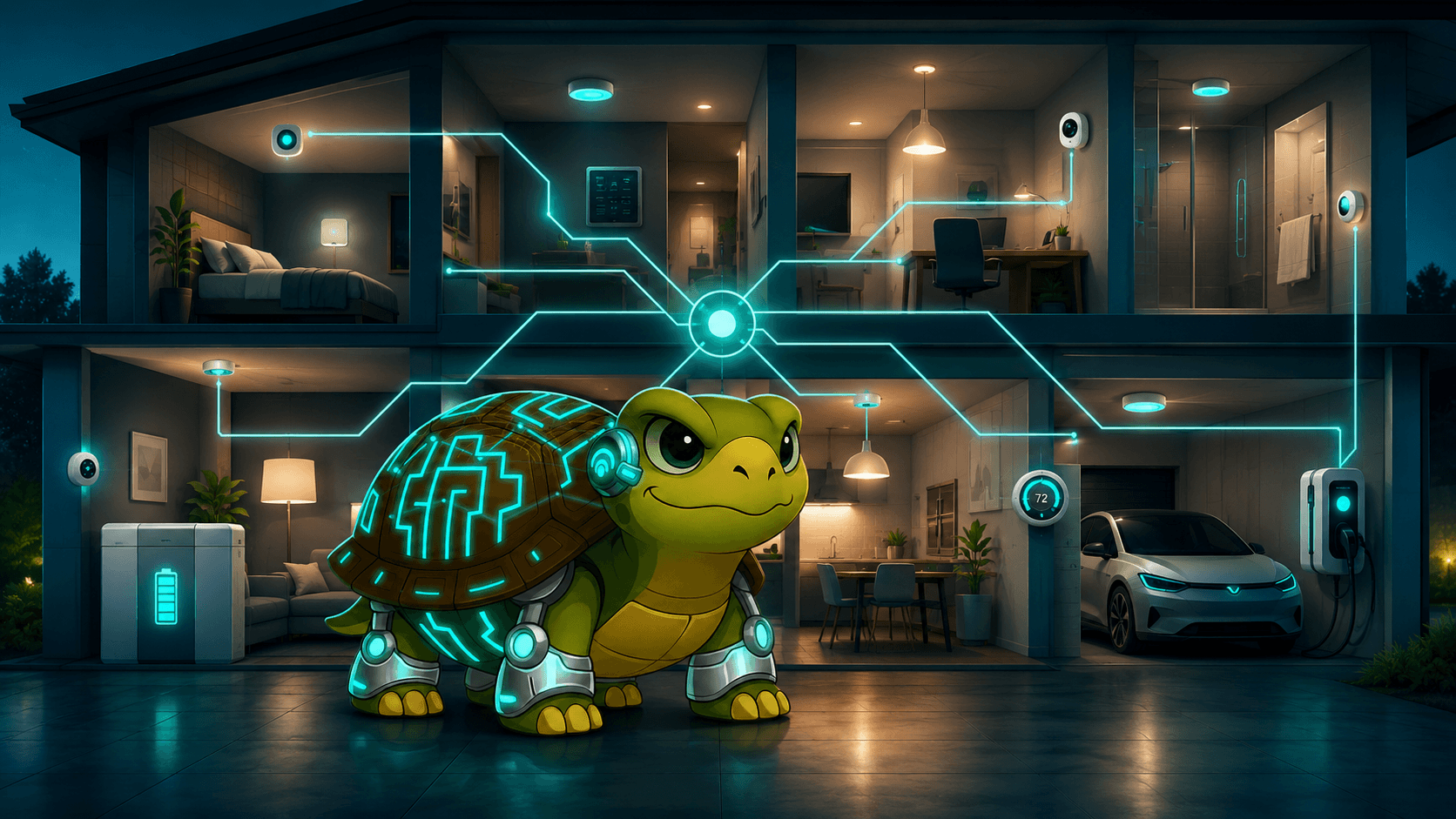
For years, the smart home was mostly a pile of obedient objects.
A bulb could dim. A thermostat could learn a schedule. A speaker could answer. A vacuum could cross the floor. Each device felt useful, but the system stayed fragmented. The house did not understand itself.
That is the shift now: not more gadgets, but the house as an operating system.
The next smart home needs a shared layer where devices understand context, coordinate decisions, respect human intent, and manage the physical environment as one system.
What is changing
Five forces are pushing the home in this direction.
- Shared standards. Lights, locks, sensors, appliances, chargers, and speakers cannot keep living in separate kingdoms. Common protocols are the plumbing beneath a useful smart home.
- AI as the interface. The old interface was an app full of buttons. The better interface is intent: “prepare for sleep,” “keep the office quiet,” or “lower energy use without making the room uncomfortable.”
- Local control. A home contains routines, voices, movement, sleep, visitors, and absence. More intelligence should run near the owner, not only in distant clouds.
- Energy awareness. Solar, batteries, chargers, heating, cooling, and grid prices are moving to the center. The home is becoming a small energy system.
- Device coordination. The useful home is not a collection of brilliant objects. It is a network of ordinary devices that can agree on what should happen next.
The old smart home answered commands. The new smart home coordinates conditions.
A simple near-future scene
Mara wakes before the alarm.
The house adjusts quietly. The bedroom warms slightly. Hallway lights rise to soft amber. Coffee waits because Mara usually delays caffeine after poor sleep. East-facing shades open. A warmer room stays shaded.
Mara says, “Slow morning. Deep work at nine. Keep the house cheap today.”
The house turns that sentence into a temporary plan.
The office prepares for silence. The washer waits for cheaper power. The battery keeps reserve. The car charges slowly because it is not needed until evening. The kitchen suggests food that will expire soon. The parcel box is ready for a delivery. Indoor microphones stay off unless Mara speaks the wake phrase.
At noon, the house explains itself:
I delayed laundry, charged the car slowly, used stored power during the morning peak, and kept the office quiet. Comfort stayed within your limits.
Mara approves the pattern for weekdays.
The important part is not flash. It is legibility. The house can act, but it can also explain. It can optimize, but only inside human boundaries.
The real trend is agreement
The future home needs a negotiation layer.
Each device brings capabilities and limits. The system asks a few basic questions:
- What does the human want?
- What does the home know?
- What should happen now?
- What should wait?
- What must remain private, local, or off limits?
That changes the ownership question.
If AI becomes the interface to the house, the key question is not only “Can this device connect?” It is “Who governs the intelligence that connects everything?”
A good home system should answer clearly:
- Can it work without a subscription?
- Can decisions be inspected?
- Can devices be replaced without rebuilding everything?
- Can privacy be the default?
- Can local control survive an internet outage?
The smart home is becoming a test of human agency.
What could go wrong
A coordinated home can help. It can also become opaque.
If it optimizes without explanation, it becomes annoying. If it collects too much, it becomes invasive. If it depends on outside services, it becomes fragile. If every vendor tries to own the interface, the person ends up managing alliances instead of living.
There is also fake intelligence: voice commands with better marketing. The real shift is not a chatbot in a speaker. It is a home that can interpret intent, coordinate devices, respect constraints, act locally when needed, and explain itself in plain language.
The best version of this future does not replace attention. It protects attention.
The direction
The house is becoming a computation layer for daily life.
That will not feel grand. It will show up as a quieter room, a lower bill, a safer package drop, a better night of sleep, a charger that waits, or a light that knows the difference between waking and working.
The direction is clear:
- fewer isolated gadgets
- more shared standards
- more AI-mediated intent
- more local intelligence
- more energy awareness
- more explainability and control
The winning home will not be the one with the most devices. It will be the one where devices disappear into coherent service.
A good smart home should not make the person feel surrounded by machines. It should make the person feel more at home.